-
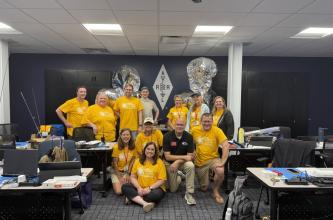
Reaching Teachers Across the Country
TI Balloon is one of our most popular electives. This course gives teachers exciting new tools to introduce concepts like meteorology, solar energy, and propagation to their students. One such class is pictured here with Director of Education & Learning and TI Instructor, Wayne Greene. -
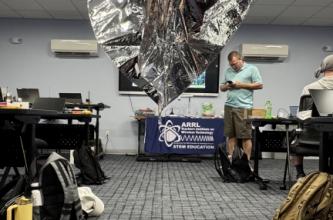
Taking Radio to New Heights
In this course teachers will work with pico balloons, like the one pictured here, to gather data from our atmosphere. Teachers are given practical training on how to orchestrate and carry out their own balloon launches for when they return to their classrooms. -
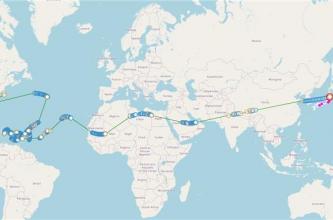
See where Balloons can take you!
Many teachers who go through our balloons class go on to do their own balloon launches. This image is from just such a teacher. Under the right conditions these balloons can cross the globe! Students who participate in balloon launches can not only learn more about the atmosphere, but contextualize their learning with the wider world around them.
TI Balloons and Amateur Radio
EXPLORE ARRL
-
On The Air
DXCC Program, W100AW & W1AW QSLs via Bureau, Centennial QSO Party, Operating Specialties, International Grid Chase 2018, Hiram Percy Maxim 150th Birthday Celebration, Cycle 25, Transatlantic, Special Event Stations, Operating Resources, QSL Service, NPOTA, Contests, Logbook of The World, Amateur Code, IARU - Centennial QSO Party, Volunteers On the Air, Awards, W1AW, Amateur Radio Direction Finding
Licensing, Education & Training
FCC License Info and Forms, Getting Licensed, Newly licensed? Learn More, Volunteer Instructors/Mentors, Amateur Radio in the Classroom, Youth Licensing Grant Program , Question Pools, Withdrawn Questions, Education & Learning Department, Courses & Training, Emergency Communications Field Instruction, Volunteer Examiners, License Certificates, What is Ham Radio, Gordon West
Membership
Member Directory, myARRL, Blind Membership, Join ARRL/Renew Membership, member feedback, Dues Increase FAQ, Techquestion, Students, Please Confirm Your Information, Member Bulletin, QST Reissue, Membership Certificate, Member Support, Connecticut Member Social, Login Instructions, Dues Survey, Gift Membership, 3-Year Special Offer, 2024 Dues Rates, ARRL Groups, By-Laws Update, Student, ARRL Sweepstakes, Silent Key Submission Guidelines, Member Bulletin, Register, Member Discounts, Alabama Survey
-
Regulatory & Advocacy
State and Local, Volunteer Consulting Engineer Program, Volunteer Counsel Program, CCR Study Information, International, Technical Relations Office, Federal, Volunteer Monitor Resources, Federal RFI Preemption, Antenna Regulation and Zoning, Volunteer Monitor Program, HOA Alternatives
Public Service
NTS Manual, Public Service Resources, Volunteer Form for Deployment Consideration, 2018 Hurricanes, Hurricane Maria - 2017, Hurricane Irma - 2017, Hurricane Harvey Response, Ham Aid, 2019 Hurricanes, 2020 Hurricanes, 2021 Hurricanes, Puerto Rico - Caribbean Recovery 2017, Kentucky ARES Summit and Survey, Hurricanes, 2024 Hurricanes, SKYWARN Recognition Day, Public Service Honor Roll, ARES, Served Agencies and Partners, NTS
Technology
ARRL References, Tech Portal, Radio Technology Topics, Technical Information Service, Radio Frequency Interference (RFI), Larson, ARRL Clean Signal Initiative, ARRL Lab
-
Get Involved
Clubs, Volunteer Opportunities, Recruiting & Outreach, The ARRL Foundation, Youth, Donate to ARRL, Amateur Radio Activity Report, Happy, America250, Collegiate Amateur Radio, Hamfests and Conventions Calendar
Publications & Online Store
ARRL Publication Dealers, ARRL Store, List all Products, Return Policy, Shipping and Tax, Handbook, Customer Service/Support, Holiday Deals, Product Notes, ARRL Handbook 102
About ARRL
Site Index, Centennial, ARRL Strategic Plan, Advertising and Other Business Opportunities, ARRL on the Purpose of Amateur Radio, Library, Ideas, Privacy Policy, ARRL Social Media, Organization Structure, Media and Public Relations, ARRL Museum and Research Library, Contact ARRL, Copyright, Strategic Plan, Visit Us, ARRL Heritage Museum, General Information, Employment Opportunities


ARRL
The National Association for Amateur Radio®
225 Main Street
Newington, CT, 06111-1400 USA
Tel: 1-860-594-0200 | Fax: 1-860-594-0259
Toll-free: 1-888-277-5289
hq@arrl.org
ARRL
Copyright © 2026 The American Radio Relay League, Inc. All rights reserved. Reproduction of material from any ARRL web page without written permission is strictly prohibited.